

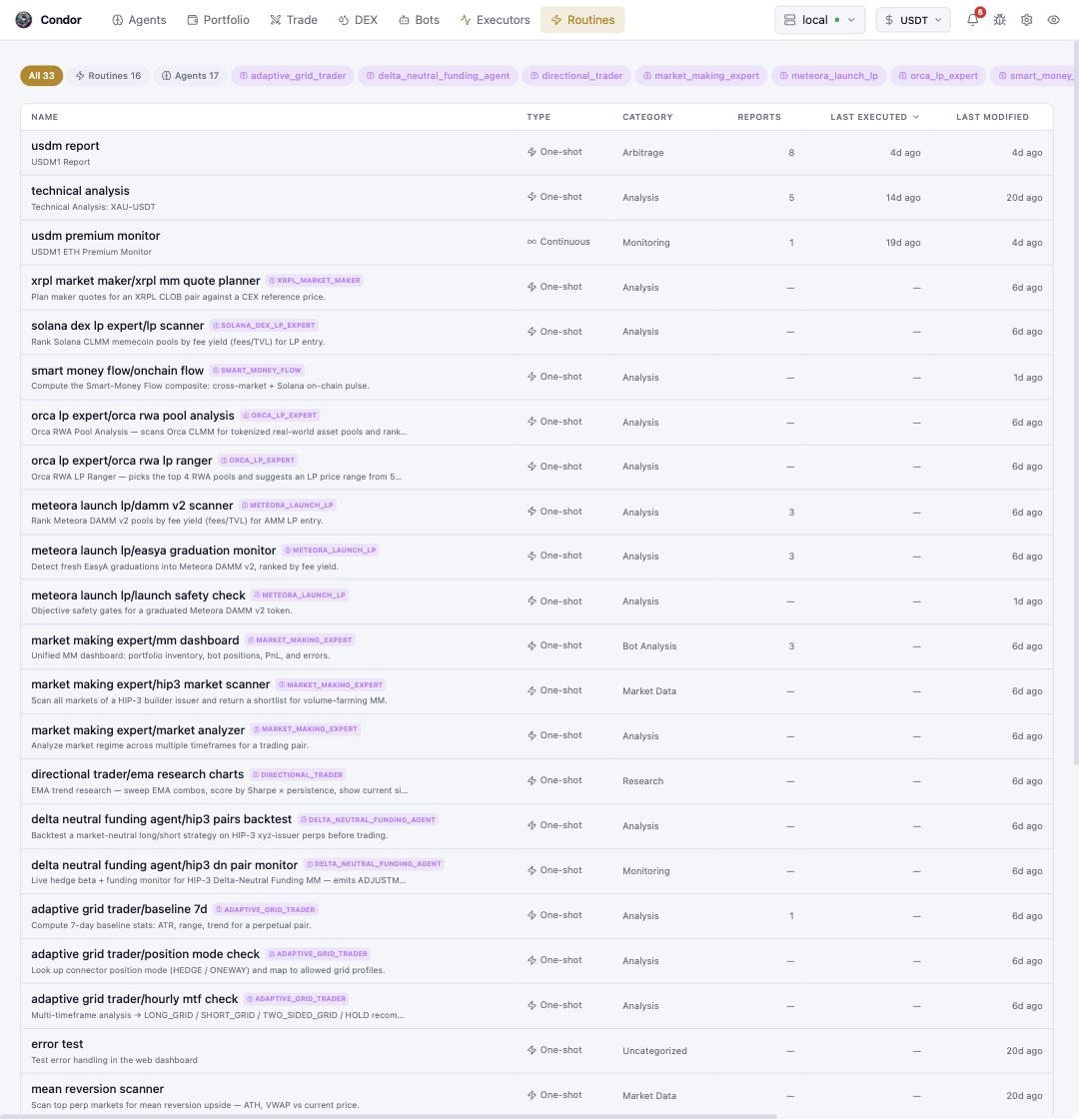
Navigating the list
- Filter chips — All, Routines (yours, from the
routines/folder), Agents (routines belonging to agents), then one chip per agent to see just its toolkit. An agent-owned routine carries its agent’s badge in the name column. - Columns — Type (
One-shotruns once or on a schedule;Continuousruns until stopped), Category, Reports it has produced, Last executed, and Last modified. Sort by the column headers.
Using Telegram
/routines lists the same library: pick a routine, fill its typed config field by field, run it once or schedule it (interval or daily), and stop continuous ones — ⏹ Stop All included. 🔄 Reload re-discovers scripts after you drop a new file into routines/. Reports a routine produces are delivered straight into the chat.